
SOHO – The Emerging Story

This is where it all starts – low cost, almost nil rentals, concept to reality stages of the businesses. Thousands have tried this and most businesses which started in the Garage, or from Home have been successful, going on to becoming Multinational Giants. The story of Infosys https://www.infosys.com/ is one such. The story of Natarajans Consulting is one of such
What are the truths of SOHO businesses? Is a small office from the confines of a room in a house or garage a good starting point? The internet has indeed crashed the concept of Brick and Mortar work spaces, and COVID has trampled the traditional 9-5 work culture with an estimated 38% of women preferring the ‘Work From Home’ as per a survey of Business Standard https://www.business-standard.com/ (https://www.business-standard.com/article/companies/38-indian-women-working-in-tech-industry-prefer-working-from-home-survey-121012501227_1.html). Remote working – which includes those fully on a WFH as well as those who work on a Hybrid model (where they could be part time working in an office) may be more for thoses employees who are at an academic advantage (ie have higher eduction).
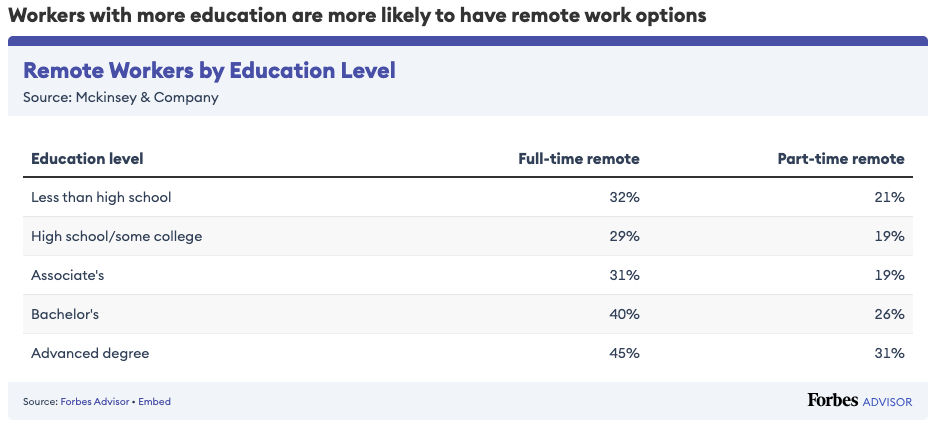
SOHO – is similarly a WFH with the option of Hybrid especially when it comes to working out of a Partner premises. At Natarajans Consulting, we operate out of our partner premises (Hybrid aspect) and otherwise operate from Home – when we have to do more back end work such as research, reports, multi-location concalls / discussions and online meetings etc
What are the pitfalls of SOHO / Remote Working and why are organisations pushing hard for employees to join back? What are the lessons for MSMEs here?
There are a few advantages of Hybrid or Full Remote working and at the same time disadvantages of this increasingly adopted employee model. Lets look at how this compares to a Entreprenuer model. If these can be fixed, then you have a success in your hands. Take a look at the below table.
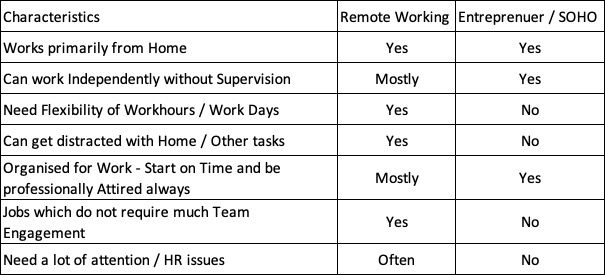
Entreprenuers are becoming experts at multi-tasking. Compared – the remote working employee is primarily driven towards more of transactional work requiring lesser Face To face engagement (and thereby visiting the office). They will prioritise family / personal commitments over work because that is the primary driver for their opting for this work method. As per the table the 3 key areas where a difference between Remote and Entrepreneurship comes are Working independently without supervision, Professional – wrt time, dress code etc, and the likely hood of HR related issues – such as leaves, shoddy / incomplete or poor work due to shortage of time (having many tasks to complete)
How to counter – gain their commitment?
- Train them on the work and the requirements – clearly. There must be no ambiguity on the tasks to be completed and the timelines. Start with smaller tasks, evaluate and then move to larger tasks
- Engage them through a method of Delivery – Outcome – Larger Income (incentivise and allocate more variable pay to the completion). To learn how to manage a better compensation structure contact@nat-cons.com
- Call for meetings to set the context in each Task – make sure they are professionally attired and punctual for these meetings
- Clarify and ensure the HR policies are clear and any deviation is brought to the attention of the employee immediately with clear exit protocols in place if not attended to. Offer all support (eg Creche even when working from home for a smaller child so that the mother can spend the time required. a Nanny’s costs. Special allowances for child needs etc
For more details – contact@nat-cons.com